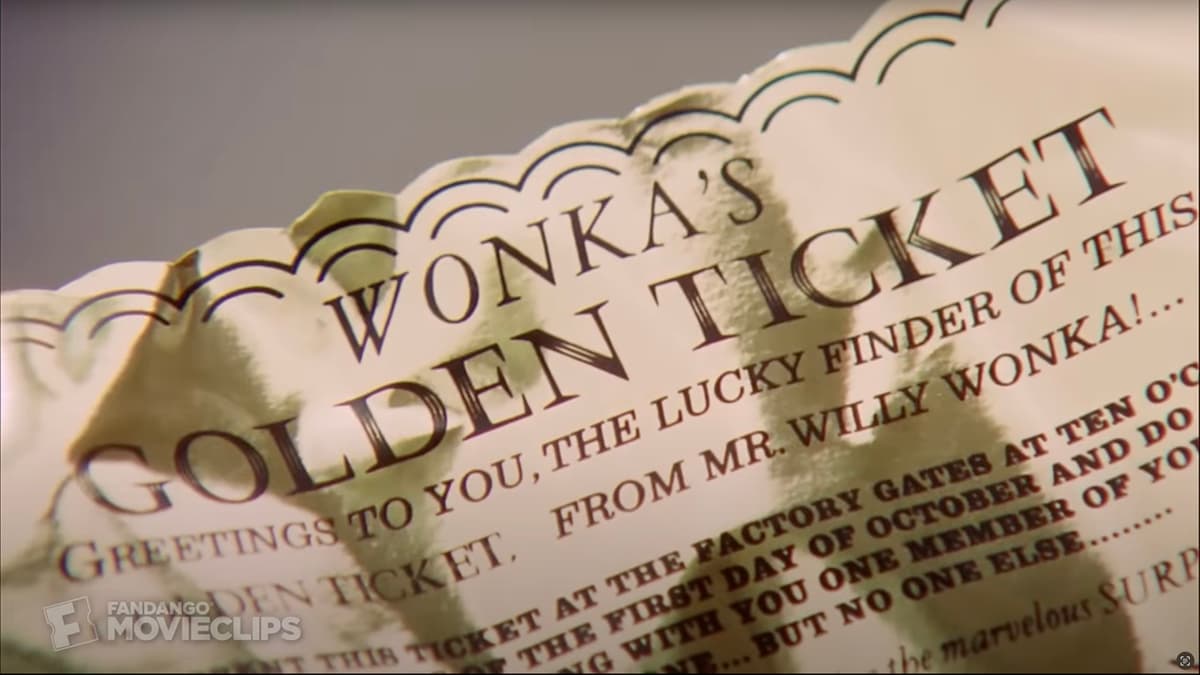
Wonka's Golden Ticket
PROP
Ticket
FUNCTION
Causal, Mimetic
DESIGNER
Unknown
MOVIE
Willy Wonka & The Chocolate Factory
YEAR
1971
DIRECTOR
Mel Stuart
PRODUCTION DESIGNER
Unknown
GRAPHIC ARTISTS
Unknown
In all of these scenarios, the visual identities are declined in a tangible dimension for fictional purposes, generally serving a verisimilitude purpose. However, in some cases, a visual identity might be pinned to the herald of the storyline, functioning as an element that introduces or foreshadows narrative developments.
An illustrative example is the golden ticket won by the protagonist of Charlie and the Chocolate Factory (Burton, 2005). It grants the protagonist, Charlie Bucket, access to Willy Wonka’s fantastical factory and marks the beginning of a journey that tests character, rewards virtue, and leads to a life-changing transformation. Comparing the two films produced over a thirty-year gap—Willy Wonka & the Chocolate Factory (Stuart, 1971) and Burton’s (2005) version—the shots are nearly identical, both using a close-up of the ticket. While both versions serve the same narrative purpose and contain the same content, the visual hierarchy and the presence of the factory logo give not only a greater sense of realism, but also make it easier to understand what it is about. It is important to consider the differences in historical context and design conventions of the time in which the first film was made; however, the more recent version demonstrates a cleaner layout and greater legibility. Ultimately, this comparison suggests how thoughtful design can be more effective in the communication and perception of a film.